
Corn: Pillar of food security and engine of development in Peru
6 de August de 2025
16:30
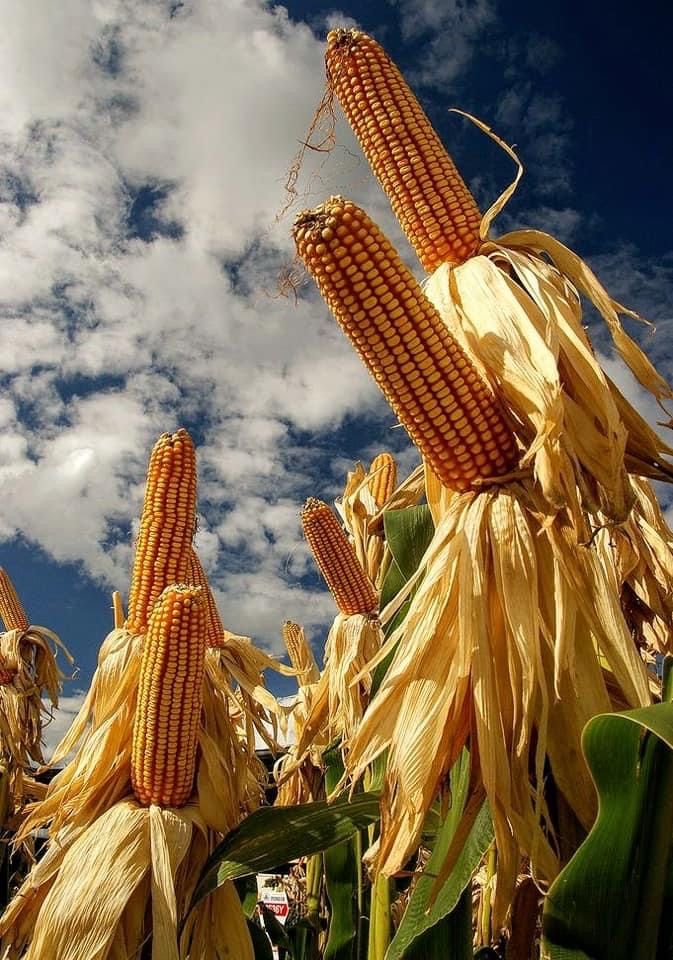
With more than 550,000 hectares cultivated annually, corn is key to the Peruvian economy, providing sustenance for thousands of families and supporting the livestock industry. The challenge lies in increasing domestic production through hybrid seeds and advanced technology to reduce dependence on imports and strengthen food security.
Corn is the most important crop in terms of land area in Peru. From a food security perspective, it is a strategic crop for human and livestock consumption, and the cultivation, processing, and sale of corn generates employment and contributes to the economic development of local communities .
An average of 550,566 hectares of corn are planted annually nationwide, and approximately 85,000 families depend directly on this crop, demonstrating its socioeconomic importance for our country. Of this total area, approximately 288,000 hectares are planted with hard yellow corn, 211,000 hectares are planted with starchy corn, 46,624 hectares are planted with sweetcorn, and 4.3 thousand hectares are planted with purple corn.
Hard Yellow Corn (DYC)
In the case of the MAD, it is estimated that approximately 87.8% of the total area is used for grain production (used primarily to feed chickens, pigs, and cattle), and the remaining 12.2% is used for forage production (for dairy cattle). In recent years, corn has been used to feed smaller animals (guinea pigs).
The main departments producing agricultural land for grain are located in the coastal region, with 110,000 hectares, and in the jungle region, with 178,000 hectares. Of the total agricultural land area on the coast, approximately 36,000 hectares are used for fodder production (for cattle feed).
In the coastal region, the departments with the largest MAD areas are: Lambayeque, La Libertad, Ancash, Lima, Ica, and Arequipa, which have corn-producing areas characterized by the use of medium-to-high technology, quality seeds (hybrids), and regular water availability. The average grain yield per hectare is 10.3 to 11.4 tons /ha (in some valleys in the northern region, yields have exceeded 16 tons / ha ). It is worth mentioning that on the coast, the use of quality seeds (hybrid seeds) reaches 95% of the planted area.
In the jungle region, the most important departments of corn production are San Martín, Loreto, Amazonas, Ucayali, and Huánuco. In recent years, some corn-producing areas in these departments have improved their corn crop management. For example, the conversion of quality seed (from grain to hybrid seed) has increased significantly, and improved pest and weed control has allowed for an increase in average yield, which currently ranges from 4 to 5 tons /ha. Yields have even been reached in some areas as high as 9 tons /ha.
Starchy corn
of starchy corn cultivation, the main producing region is the mountain range. The departments with the highest starchy corn production are: Cajamarca, Cusco, Apurímac, Ayacucho, Huancavelica, and others (all departments in the mountain range produce starchy corn).
In the coastal region, there are also varieties of starchy corn, but these are used for the production of sweetcorn (used to accompany seviche). The yield of sweetcorn is around 18 tons /ha, and in the case of dry corn (mote or canchita), the yield is around 3 to 4 tons /ha.
One point worth highlighting once again is that Peru is considered the center of origin of corn and boasts a vast genetic diversity of 51 to 55 corn varieties, mostly starchy. The evolution of these varieties dates back to ancient times, when farmers played an important role, performing a wide range of functions related to seed production and maintenance.
“All starchy corn varieties are open-pollinated varieties, improved in some cases by mass selection . Unlike MAD, there has been no significant genetic improvement, and there are currently no starchy corn hybrids. For this reason, the yields of starchy corn varieties are still highly variable, and much of this production is for personal consumption and the rest is sold in local markets, although there is already a small commercial production for export.”
The national market potential for the MAD
The current demand for MAD, only from the national poultry industry for this product, amounts to around 5.8 million tons/year, however, national production of MAD grain reached approximately 1.38 million tons /year in 2023, that is, only 23.7% of the total demand for said grain was supplied, which means that the demanding sector is forced to import the rest, generating an outflow of foreign currency.
For domestic production of MAD to meet national demand 100%, it is necessary to increase yields. This requires high-quality genetics (hybrids with high yield potential and tolerance to major crop diseases), as well as the application of improved technology to the crop.
“The challenge for improving yields on the coast lies in mechanizing cultivation (planting, fertilization, and harvesting), while in the rainforest, the use of quality seeds (hybrids) must be significantly increased. Of the 178,000 hectares of ADF cultivated in the rainforest, between 16% and 20% already use quality seeds, which has allowed them to increase their yield from 2.5 T/ ha to 5 T/ha.”
It’s worth mentioning that the majority of corn planted in the rainforest is located on hillsides and depends on rainfall; furthermore, most producers do not fertilize or control weeds, which limits production yields.
“If we can increase the 178,000 hectares of MAD currently cultivated in the rainforest, which have an average yield of 5.0 tons / ha, to 8.5 tons / ha with the use of hybrid seed, we would be talking about an increase in national grain production of almost 623,000 tons . This would cover a large part of imports, which would prevent the outflow of foreign currency and significantly increase the income of these farming families.”