
Forage mixtures: A way to extend the life of a pasture
6 de August de 2025
11:23
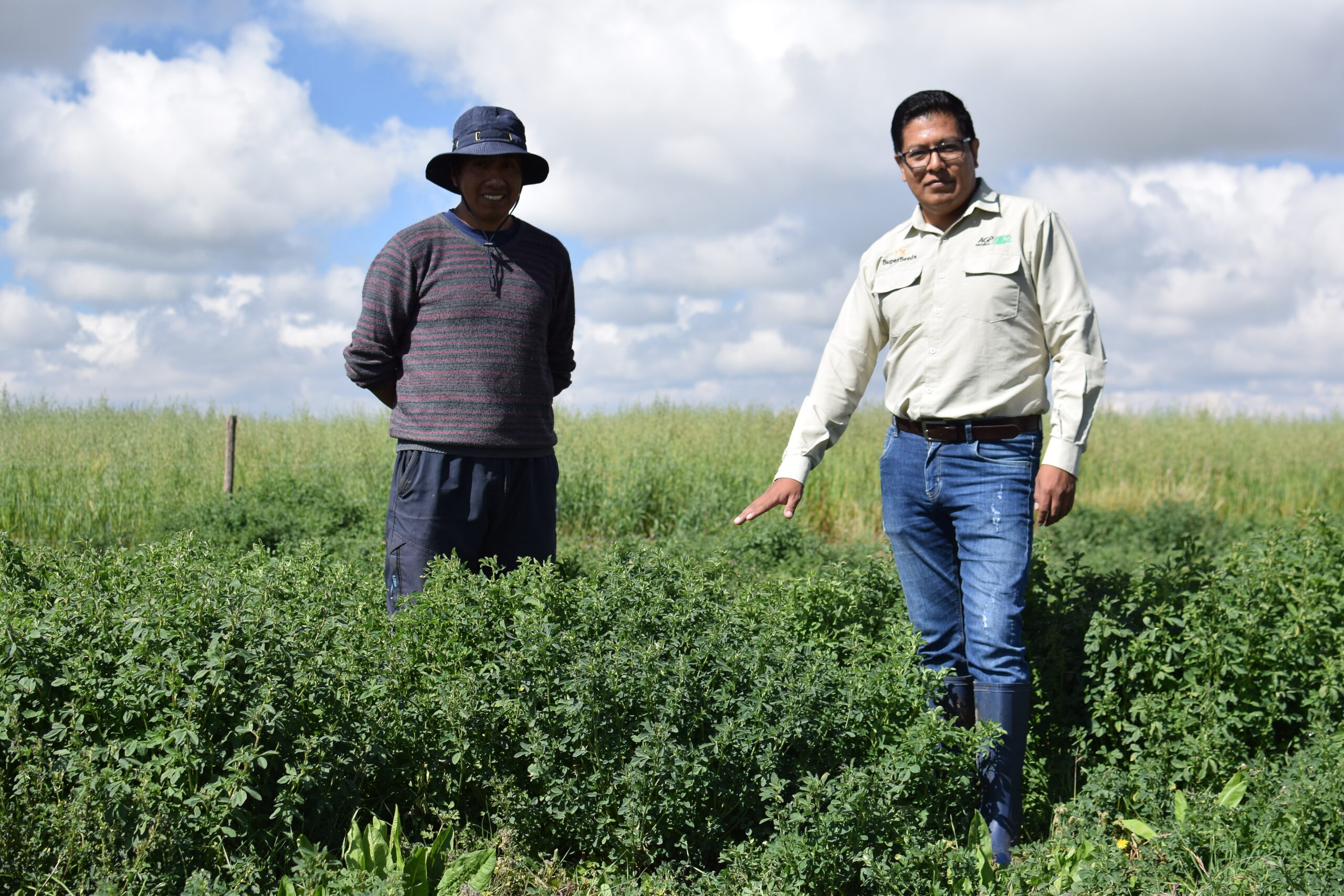
Innovation in feed mixtures: solutions tailored to each region of Peru to maximize feed production and quality, strengthening sustainable livestock development.
Grazing livestock farming is a production system that bases its efficiency and profitability on the greatest supply of quality forage during the rainy season, which begins in spring and ends in autumn. This cycle is common to 95% of farms dedicated to this activity in Peru and much of the world. The main variation lies in the length of the rainy season, which can be short (as in Puno, three months) or long (as in Cajamarca, seven months).
Forage, preferably measured in tons per hectare (ton/ha) and its dry matter content, must be translated into liters of milk per hectare during the annual cycle. The central idea of this system is to obtain the highest possible number of liters of milk per hectare.
The success of a grazing production system depends on several factors, including three main ones:
1. The varieties selected.
2. Animal entry and exit management.
3. The rest period during the dry season.
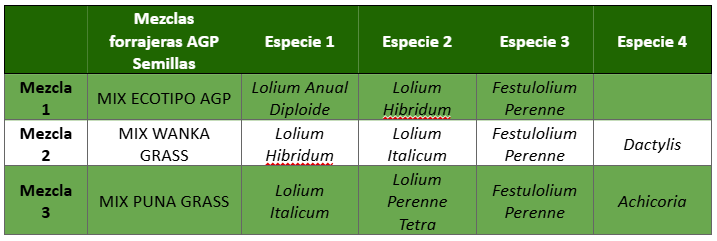
Forage mixtures consist of the joint planting of two or more species in the same area, which may be a combination of grasses, legumes, brassicas, forage herbs, or others. The main objective is to enhance forage production, availability, and quality compared to the use of a single species or crop. Generally, mixtures of two or three species or cultivars are used.
Knowing the characteristics of the rainfall cycle, soil type, and temperatures of each region, the varieties to be used must be selected, always looking for those that combine the best characteristics of each species. These characteristics include:
1. A species that grows quickly in spring.
2. A species that resists trampling and therefore produces many tillers.
3. One that can withstand prolonged periods of flooding.
4. One that can be maintained as long as possible at the beginning of the dry season.
5. One that provides protein.
6. One that provides essential minerals.
It is difficult to obtain all of these characteristics in a single mixture or in a single commercial product, but ranchers can achieve this directly at the time of installation.
Looking at the aforementioned characteristics, a single species is likely to have only one or, at most, two of them. It is important to note that the mixture is essential in a grazing system, as single-species production systems are more closely related to pasture-based systems.
Some relevant aspects of using forage mixtures:
Long shelf life: The goal of a forage mixture is for it to be perennial, meaning that it does not have a shelf life that requires reworking the soil and reseeding. Only areas of the pasture that have been damaged by animal trampling should be reseeded annually. In this way, it is possible to implement a mixed grazing system with minimum tillage.
Synergy between competitors: Since species compete with each other for light and space, this is beneficial and translates into better forage production. Furthermore, they complement each other, as is the case with legumes, which contribute nitrogen to the soil, and perennial grasses, such as fescue, which provide support for the legumes to withstand constant trampling.
Complete nutrition: Grasses provide starch and fiber, legumes provide protein, and brassicas offer essential elements such as vitamins and minerals.
Lower cost: By having a forage mix that provides complete nutrition, livestock do not require additional supplements, which reduces the costs associated with the purchase of these products, their transportation to the farm, and the use of facilities, machinery, and labor.
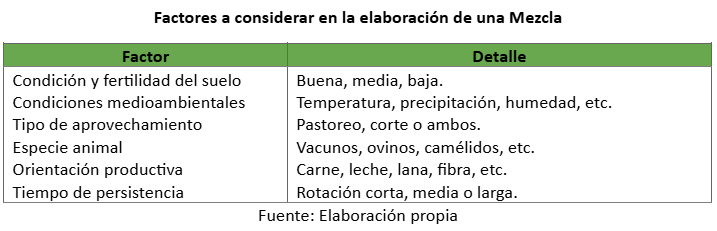
Grazing livestock farming directly affects the poorest sectors of the population in Peru. In recent years, its productivity has improved considerably thanks to support programs that provide seeds in exchange for labor. This has allowed ranchers, especially in Peru’s Andean region, to use forage seeds instead of relying on grazing on natural pastures with low nutritional value. The use of forage mixtures should be the next step to develop and disseminate, especially to increase productivity in liters of milk or meat per hectare.